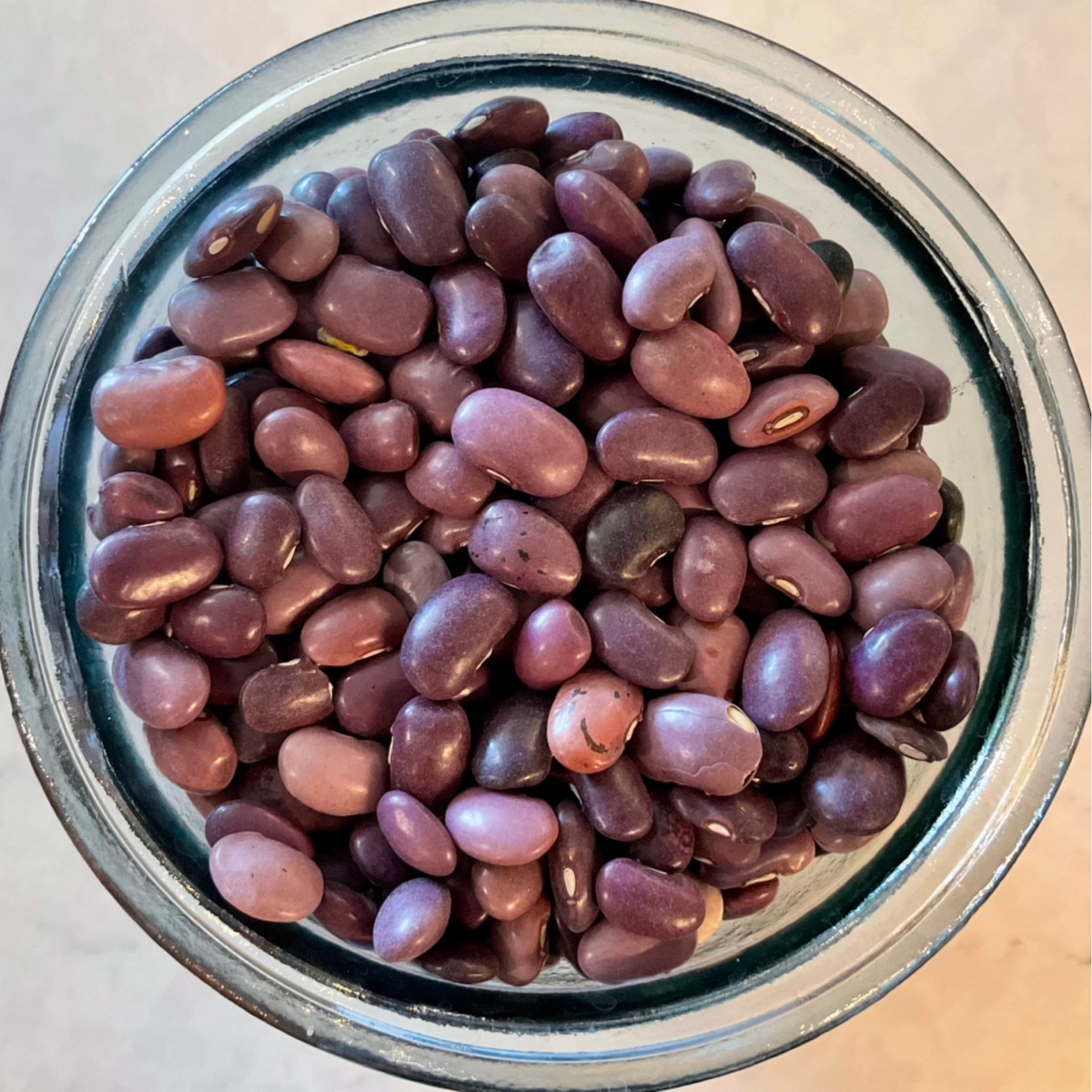
Beans, Ayocote Morado, Heirloom, Glyphosate - Free
$6.50/lb
rich, deep purple creamy heirloom beans from Mexico’s volcanic highlands
In stock
Ayocote morado beans are large, deep-purple heirloom runner beans with an earthy, slightly sweet flavor and a creamy interior. Their skins hold up well through long cooking, making them especially good for brothy pot beans, bean salads, grain bowls, soups, and dishes where the bean itself is the centerpiece. Ayocote morado (Phaseolus coccineus) is a different species than common beans and is native to the volcanic highlands of central Mexico, where it has been cultivated for more than 2,000 years.
These beans are grown on the slopes of the Matlalcueitl volcano, also known as La Malinche, at 2,540 meters of elevation in Tlaxcala. The volcanic soil and high-elevation growing conditions produce a bean that is larger, denser, and more flavorful than many runner beans grown elsewhere. Traditionally, ayocote beans are grown in milpa polyculture, planted alongside corn in the same plot where the two foods are meant to be eaten together. They pair especially well with heirloom yellow masa, mole, roasted squash, braised greens, fresh cilantro, and simple bean broth. They are not the best choice for refried beans, where a bayo or pinto bean works better.
Sourced through Masienda, a direct-trade company working with more than 2,000 smallholder farmers and artisans across seven Mexican states. Farmers are paid 4 to 7 times commodity rates, in full and up front, before each season’s harvest. Per Masienda’s published sourcing standards, these beans are grown without pesticides or herbicides, farmers using glyphosate are excluded from the supplier network, and every batch is tested for glyphosate at the warehouse and verified by third-party labs. Post-harvest pest protection is chemical-free. These beans are not USDA Organic certified, since that certification structure is often inaccessible for smallholder farmers in remote regions of Mexico, but the sourcing practices and testing transparency are unusually strong.
How to cook: Soak overnight in plenty of water. Drain, then simmer in fresh water with a halved onion, a few garlic cloves, and epazote for 2 to 3 hours, until creamy and the broth has thickened. Salt near the end of cooking. Older beans may take longer.
Sourcing: Direct trade through Masienda Growing Practices: Glyphosate-free, pesticide-free, herbicide-free, third-party glyphosate tested
Origin: Tlaxcala, Mexico, grown near Matlalcueitl / La Malinche volcano
Learn More: https://masienda.com/pages/sourcing
We do our best to keep our nutrition data up to date. For the latest specifics on a current product, please reach out and we will be happy to confirm the details for you.
Store in a cool, dry place. Best cooked within one year of purchase, though dried beans remain edible longer when stored properly.